
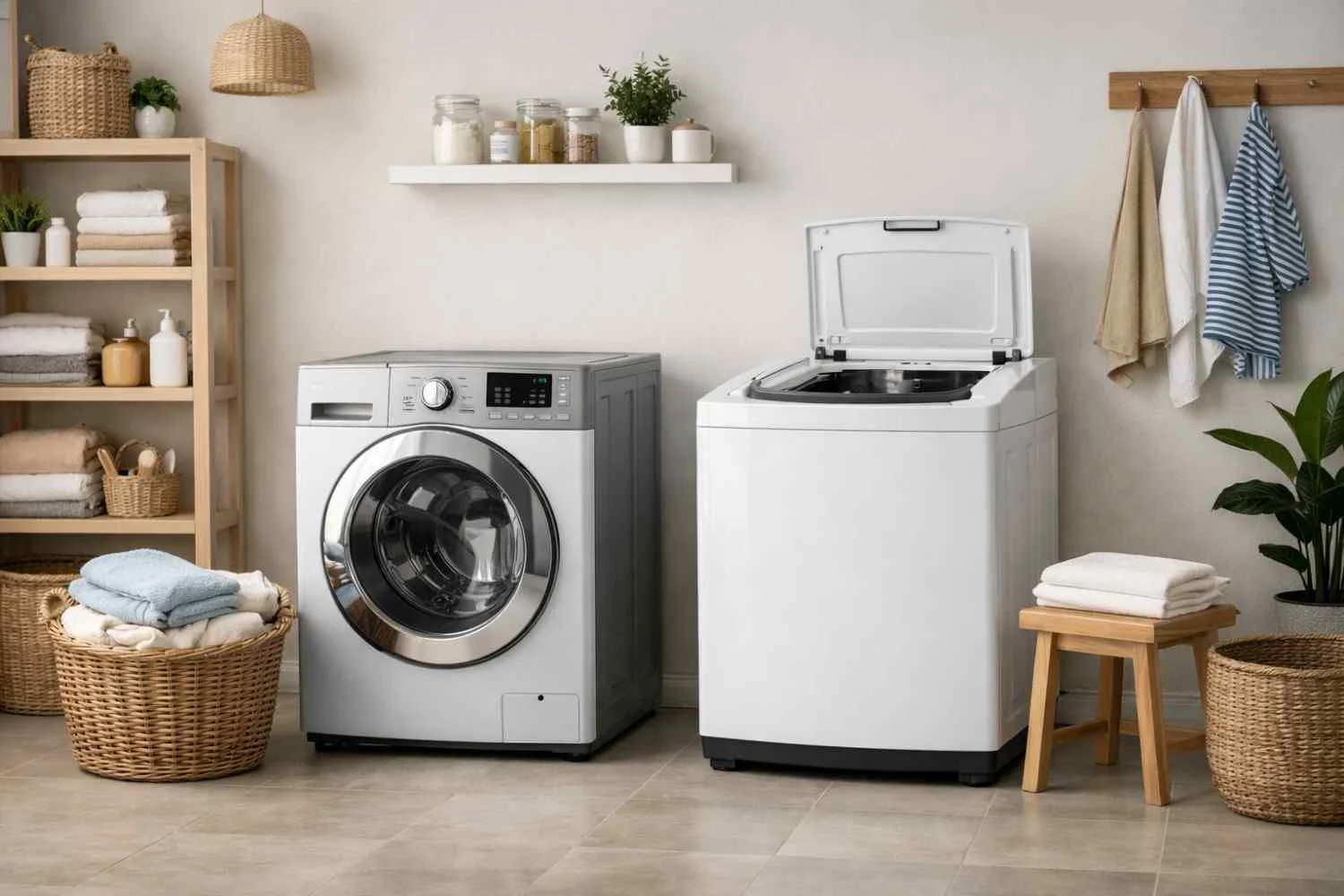
Washing Machine Buying Guide – Best Models & Types in India
Shopping for a new washing machine can feel confusing. There are dozens of models, different capacities, many features, and big price differences. If you’re wondering which is the best washing machine for your family, this detailed washing machine buying guide will walk you through everything step by step.
A washing machine is a home appliance that washes clothes automatically. You simply add clothes, detergent, select a wash program, and the machine does the soaking, scrubbing, rinsing, and spinning for you. It saves time and effort and gives better wash quality than manual washing.
For Indian households, washing machines have moved from luxury to necessity. Busy work schedules, school uniforms, daily wear, and delicate fabrics make manual washing impractical. A good washing machine helps you:
● Save hours of manual scrubbing every week
● Keep clothes cleaner and fresher
● Reduce water and detergent wastage
● Protect fabrics with gentle wash programs
● Handle heavy items like bedsheets and curtains easily
This guide covers the main types of washing machines, capacity selection (6 kg–9 kg), washing machine price ranges, energy efficiency, and how to choose the best washing machine for your home based on your family size, usage, and budget. If you’re ready to explore models across all brands and capacities, you can start with the full range of washing machine options.
Types of Washing Machines
Before you look at models and prices, you need to understand the main types of washing machines. Your choice here affects convenience, water usage, wash quality, and space.
The major types are:
● Top-load washing machine
● Front-load washing machine
● Semi-automatic washing machine
● Fully automatic washing machine
Let’s break each one down in simple terms.
1. Top Load Washing Machine
A top-load washing machine has a vertical drum and a lid on top. You open the top, put in clothes, add detergent, choose a program, and start the wash.
Key benefits of a top-load washing machine:
● Easy to use – no need to bend to load/unload
● You can add forgotten clothes mid-cycle in most models
● Shorter wash cycles compared to many front loads
● Generally more affordable than equivalent front-load models
● Better suited for elderly people or anyone with back problems
However, top-load models often:
● Use more water than front-load washing machines
● May not be as gentle on very delicate fabrics
● Sometimes have slightly lower energy efficiency compared to top-end front loads
If you want a simple, reliable washing machine that’s comfortable to use and fits into a typical Indian utility area, a top-load model works well.
2. Front-Load Washing Machine
A front-load washing machine has a horizontal drum with a door in front, just like a front-opening oven door. These machines use a tumbling action instead of a central agitator.
Why do many people consider front-loaders as the best washing machine type?
● Excellent wash quality due to tumbling action
● Uses less water compared to many top-load machines
● Very gentle on clothes – great for daily wear and delicate fabrics
● Usually come with advanced wash programs and features
● Better energy efficiency in many models
On the flip side:
● You usually can’t add clothes mid-cycle (in many models)
● Wash cycles can be longer compared to some top loads
● Front-load washing machines usually cost more than basic top loads
● You need to bend down to load and unload clothes
If you want top-notch wash quality, lower water usage, and advanced features, a front-load is often the best washing machine choice, especially for urban apartments and nuclear families.
3. Semi-Automatic Washing Machine
Semi-automatic washing machines have two separate tubs: one for washing and one for drying. You fill water manually or through a pipe, let the clothes wash, then move them to the spin tub.
Advantages of semi-automatic machines:
● Very affordable washing machine price range
● You control water usage manually
● Lower electricity consumption
● Can stop and start without complex programs
However, they:
● Need manual effort to move clothes from the wash to the spin tub
● Occupy more space due to twin tubs
● Don’t offer as many wash programs or convenience features
● Usually use more water than efficient fully automatic models
Semi-automatic types of washing machines suit users who want a budget-friendly option and don’t mind some manual work.
4. Fully Automatic Washing Machine
Fully automatic washing machines handle the entire process from wash to dry (spin) in a single drum. You just select a program and press start. They can be either top load or front load.
Why are fully automatic models so popular?
● One-touch operation – ideal for busy households
● Multiple wash programs for different fabrics
● No manual shifting of clothes between drums
● Better wash consistency and convenience
Fully automatic models cost more than semi-automatic machines but offer far more convenience and features. If you want a modern, hassle-free washing machine buying guide recommendation, a fully automatic model (top or front load) is usually the best long-term choice.
Once you compare the pros and cons, you’ll probably think about which one wins in the classic comparison of top load vs front load washing machines, especially for Indian homes.
Washing Machine Capacity Guide (6 kg–9 kg)
Choosing the right capacity is just as important as choosing the right type. If the capacity is too small, you’ll run multiple loads and waste time, water, and electricity. If it’s too big, you’ll spend extra on purchase and running costs without using the full drum.
Here’s a simple washing machine capacity guide for Indian families:
1. 6 kg – Ideal for Bachelors & Couples
A 6 kg washing machine suits:
● Bachelors who wash 3–4 times a week
● Couples with limited daily laundry
● Homes with limited space
You can usually wash:
● 6–7 light T-shirts
● A few pairs of jeans
● Some undergarments and small towels
If you live alone or with one partner and don’t wash heavy items daily, a 6 kg model is enough. To browse suitable models, explore options in the 6 kg washing machine range.
2. 7 kg – Perfect for Small Families
A 7 kg washing machine is ideal for:
● Families of 3 members
● A couple with one child
● People who wash alternate days
You can comfortably wash:
● Daily clothes for a small family
● A couple of bedsheets (depending on thickness)
● Kids’ uniforms and casual wear
It strikes a balance between usable capacity and efficient running costs. Many buyers find this to be the best washing machine size for small families. You can compare options under the 7 kg washing machine category.
3. 8 kg – Good for Medium Families
An 8 kg washing machine works well for:
● Families of 4 members
● Homes where washing happens 2–3 times a week
● People who wash bulk items like bedsheets, towels, and curtains regularly
In an 8 kg drum, you can wash:
● Clothes for 3–4 people in one go
● Multiple towels and one bedsheet
● Mixed loads of jeans, T-shirts, and casual wear
If you want enough room without overloading the machine, 8 kg often feels just right. Check models in the 8 kg washing machine list to see which features match your lifestyle.
4. 9 kg – Best for Large Families
A 9 kg washing machine is suitable for:
● Families of 5 or more
● Joint families with frequent washing
● Homes that wash bedsheets, blankets, and towels together
You can easily wash heavy loads:
● Multiple bedsheets and towels in one cycle
● Weekly bulk washing for large families
● Bulky items like light blankets (depending on model guidance)
If you have a big family or prefer to wash everything in one go, a 9 kg model can be the best washing machine choice. Explore the heavy-duty options in the 9 kg washing machine capacity band.
Washing Machine Price & Budget Guide
The washing machine price in India depends on type, brand, capacity, and features. Here’s a quick breakdown so you can plan your budget smartly.
1. Budget Range Washing Machines
Budget washing machines usually include:
● Semi-automatic models with 6–8 kg capacity
● Basic top-load fully automatic models with limited features
They’re ideal if:
● You want an affordable entry-level washing machine
● You don’t mind fewer wash programs
● You’re fine with slightly higher water usage in some cases
These machines cover basic needs but may not have advanced energy efficiency or smart features.
2. Mid-Range Washing Machines
Mid-range washing machines often offer the best balance of price and performance. This segment generally includes:
● Fully automatic top load machines with 6–8 kg capacity
● Entry-level to mid-range front-load washing machines
You typically get:
● Multiple wash programs (daily, delicate, quick wash, etc.)
● Better build quality and durability
● Improved energy and water efficiency
● Features like delay start, child lock, and better spin speeds
For most nuclear families, a mid-range model feels like the best washing machine sweet spot.
3. Premium Washing Machines
Premium models are packed with advanced features and superior build:
● High-end front-load washing machines
● Smart Wi-Fi-enabled models
● Larger capacities like 8–9 kg and above
In this category, you can find:
● Excellent energy efficiency (higher BEE star ratings)
● Steam wash, allergen removal, fabric-specific programs
● Better noise control and vibration reduction
● Sleek design that suits modern interiors
If you see your washing machine as a long-term investment and want the best wash quality with advanced features, this segment is worth exploring.
4. Factors Affecting Washing Machine Price
Several factors directly impact the washing machine price:
● Type: Front-load and fully automatic machines generally cost more than basic top-load or semi-automatic types.
● Capacity: Higher capacity usually means a higher price.
● Features: Inverter motor, steam wash, Wi-Fi connectivity, special drum designs, and advanced programs increase the cost.
● Energy rating: Machines with better BEE star rating can be more expensive upfront but save money in the long run.
● Brand & warranty: Trusted brands with longer warranties may cost a bit more but provide better peace of mind.
If you want a deeper breakdown of cost ranges and what you get at each level, you can explore this detailed washing machine price guide.
Energy Efficiency & Key Features
A modern washing machine doesn’t just clean clothes. It also manages water and electricity smartly. When you compare models, pay attention to energy efficiency and essential features.
1. BEE Star Rating
In India, the Bureau of Energy Efficiency (BEE) gives star ratings to appliances like washing machines. More stars usually mean better energy efficiency.
● 1–2 star: Basic efficiency
● 3 star: Decent for regular household use
● 4–5 star: High efficiency, ideal for frequent washing
A higher star-rated best washing machine might cost more initially but can save you a lot on electricity bills over the years, especially if you run it daily.
2. Inverter Motor Benefits
Many modern washing machines come with inverter technology. Instead of running the motor at a fixed speed, the inverter motor adjusts the speed based on the load inside the drum.
Benefits include:
● Lower power consumption
● Less noise and vibration
● Smooth operation with better performance
● Longer motor life and often longer warranty
If you wash frequently or run the machine on heavy loads, an inverter motor is a very useful feature.
3. Water & Electricity Consumption
Water usage matters a lot in Indian cities where water supply is sometimes limited. Front-load washing machines are typically more water-efficient than many top-load models.
To manage both water and power:
● Prefer higher BEE star ratings
● Use eco or quick wash programs for lightly soiled clothes
● Avoid overloading the drum
● Wash full loads instead of many tiny loads
Choosing a machine that balances performance and consumption is a key part of any washing machine buying guide.
4. Noise Levels & Durability
Nobody enjoys a noisy washing machine rattling during every spin cycle. When comparing types of washing machines, check for:
● Inverter or direct-drive motors (quieter in many cases)
● Vibration control technology
● Stable design and quality build
Durability also depends on:
● Drum material (stainless steel drums usually last longer)
● Build the quality of the body and lid
● Brand reputation and after-sales service
● Warranty on motor and overall product
A slightly higher washing machine price can be worth it if it gives you a solid, long-lasting appliance with quiet performance.
How to Choose the Best Washing Machine
Now that you know the types of washing machines, capacity ranges, and price segments, let’s put it all together. Here’s a simple decision framework to choose the best washing machine for your home.
1. Family Size
Match your family size to capacity:
● 1–2 members: 6 kg
● 3 members: 7 kg
● 4 members: 8 kg
● 5+ members: 9 kg or more
If you wash large items like heavy bedsheets or blankets frequently, consider going one capacity step higher.
2. Daily Usage Frequency
Think about how often you’ll use your washing machine:
● Daily use: Better to choose a higher star-rated, energy-efficient, fully automatic model.
● Alternate days: Mid-range top load or front load works well.
● Once or twice a week: Even a basic,c fully automatic, or semi-automatic can serve your needs.
Frequent usage makes a strong case for investing in the best washing machine with a good build, an inverter motor, and a higher energy rating.
3. Motor Type
When you shortlist models, compare motor technologies:
● Conventional motors: Decent performance for budget buyers.
● Inverter motors: Adjust speed based on load, save energy, and often run quieter.
If the budget allows, prefer inverter motors. They usually help your washing machine last longer with smoother performance.
4. Water Availability
Water conditions in your area matter:
● Low water pressure: Some machines have special technology to work with low water pressure.
● Hard water: Look for models with hard water wash options or use external softeners.
● Limited daily supply: Front-load models can be more water-efficient in many cases.
Checks like these make a big difference in real-world performance, beyond just reading specs in a washing machine buying guide.
5. Noise & Installation Space
Check where you’ll install the machine:
● In the bathroom, balcony, or utility area?
● Do you have space for a front-opening door (front load) or is a vertical lid (top load) more practical?
● Is the area near bedroothe ms where noise can disturb you?
If space is tight or you have to place it near living or sleeping areas, look for compact models with quiet operation. You might pay a bit more washing machine price but you’ll appreciate the comfort daily.
Once you’re ready to narrow down actual models, you can explore the full range to find the best washing machine that matches your preferred type, capacity, and budget. If you want an even more focused breakdown on drum size and family mapping, you can refer to a detailed washing machine capacity guide as well.
FAQs
A washing machine is an electrical home appliance that washes clothes automatically. You load dirty laundry, add detergent, select a wash program, and the machine handles soaking, scrubbing, rinsing, and spinning. In simple terms, it replaces manual bucket washing and makes laundry much easier and faster.
There’s no single answer, but in most Indian homes:
● Semi-automatic washing machines suit budget buyers who don’t mind manual effort.
● Top-load fully automatic machines are good for users who want convenience and easy loading.
● Front-load fully automatic machines are often considered the best washing machines for wash quality, water efficiency, and advanced features.
Your choice depends on your budget, space, and how much convenience you expect. This washing machine buying guide is designed to help you compare these types of washing machines easily.
Use this quick reference:
● 6 kg: Bachelors and couples (1–2 people)
● 7 kg: Small families (3 members)
● 8 kg: Medium families (4 members)
● 9 kg: Large families (5 or more members)
Also, think about your washing habits. If you like to wash weekly in bulk, a slightly larger capacity can be helpful.
In terms of convenience, yes. A fully automatic washing machine:
● Handles washing and spinning in one drum
● Requires less manual intervention
● Offers more wash programs and better features
Semi-automatic machines are cheaper and let you control water manually, but require you to move clothes from the wash to the spin tub. If you want a modern, hassle-free experience, fully automatic models usually feel like the best washing machine option.
Electricity consumption depends on:
● Capacity (6 kg vs 9 kg)
● Type (semi-automatic, top load, front load)
● BEE star rating
● Number of wash cycles per week
● Programs used (quick wash vs heavy wash, hot water cycles, etc.)
Generally, a higher BEE star-rated washing machine uses less electricity over time. Inverter motor models also optimize power usage based on load. While the exact units (kWh) vary from model to model, choosing an efficient machine and using suitable programs helps keep your electricity bills under control.
