
Agitator vs Impeller Washing Machine – Which Is Better for Top Load?
An agitator washing machine uses a central spindle that rubs clothes to remove dirt, while an impeller washer uses a low-profile disc to move water. Both are top-load technologies; this guide helps Indian homes pick the right one.
What Is an Agitator Washing Machine?
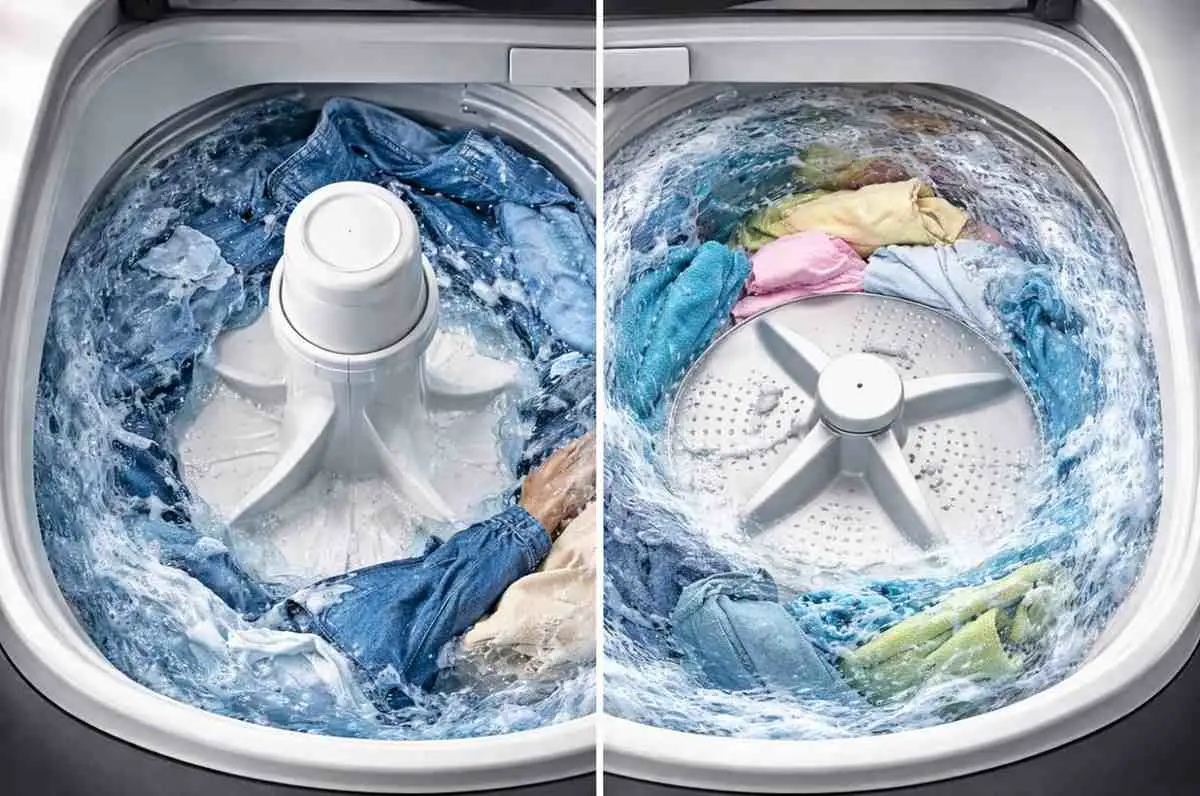
In an agitator washing machine, you’ll see a tall spindle in the centre of the drum.
This spindle has fins or vanes and moves back and forth during the wash cycle.
Here’s how it works in simple terms:
● The central rotating spindle pulls clothes around the drum.
● This creates strong mechanical movement, rubbing fabric against the agitator and other clothes.
● The action is excellent for removing heavy dirt, mud, sweat, and stubborn stains.
● Because clothes rub more aggressively, there can be slightly higher fabric wear over time, especially with delicate items.
Agitator models are common in older-style top-load machines and are still popular in homes where clothes get seriously dirty every day – think workwear, uniforms, outdoor jobs, or kids who love to play outside.
What Is an Impeller Washing Machine?
An impeller washing machine looks different inside.
Instead of a tall pole, you’ll see a low-profile rotating disc or cone at the bottom of the drum.
Key points:
● The impeller disc spins and creates strong water currents inside the drum.
● Clothes move with the water, rub against each other gently, and get cleaned through flow and friction, not hard beating.
● This design usually means better fabric care, especially for softer or delicate clothes.
● Impeller washers typically use less water than agitator models, because they rely more on water movement than a full tub.
For most modern families that wash a mix of office wear, kids’ clothes, bedsheets, and towels, impeller machines offer a nice balance of cleaning and fabric protection.
Agitator vs Impeller Washing Machine – Key Differences
To understand the differences between agitator and impeller washing machine choices clearly, it helps to see them side by side.
| Feature | Agitator | Impeller |
| Washing Action | Central spindle in the middle | Rotating base plate/disc at the bottom |
| Fabric Care | Moderate, more rubbing | Gentle, clothes move with water |
| Water Usage | Higher (needs more water in the tub | Lower (relies on water currents) |
| Wash Time | Often faster cycles | Slightly longer in many programs |
| Noise Level | Generally higher | Usually quieter |
| Best For | Heavy dirt, workwear, very soiled loads | Daily wear, mixed & delicate clothes |
Both types can be powerful in a top-load design, but they prioritise different things – agitators focus on raw scrubbing power, while impellers focus on efficiency and fabric safety.
Which Is Better for a top-load washing machine?
So, in the agitator vs impeller washing machine debate, which one actually wins for Indian homes?
● If your household uses heavy cotton clothes, work uniforms, or garments that come back covered in mud or oil, an agitator can be very effective.
● If your family cares more about water saving, lower power bills, and protecting fabrics, an impeller model makes more sense.
Put simply:
Impeller washing machines are better suited for modern Indian homes that prioritise water efficiency and gentle washing, while agitators remain effective for heavily soiled laundry and tough workwear.
Most city families with a mix of casual wear, office wear, and kids’ clothes will lean toward impellers.
Homes with heavy-duty daily dirt – such as farms, workshops, and factories – may still prefer agitators.
When Should You Choose an Agitator?
An agitator-style top-load washer isn’t outdated.
It just has a different strength.
Choose it when your lifestyle matches what it’s built for.
1. Heavy-duty laundry
If your clothes regularly face:
● Mud, grease, dust, or industrial grime
● School uniforms that come home from sports practice
● Workwear from construction sites, garages, or farms
…then the stronger scrubbing from an agitator can be a big advantage.
The central spindle moves clothes vigorously, helping lift out deep dirt that a gentler wash might leave behind.
2. Short wash cycles
Many agitator washers have:
● Shorter standard programs
● Quick washes that still feel powerful
Because the washing action is more aggressive, the machine doesn’t always need very long cycles to deliver a satisfying clean.
This is helpful if you:
● Wash clothes early before office
● Have only one machine for a larger family
● Prefer faster turnaround between wash and dry
3. Budget-friendly models
In many brands, agitator-based top-load machines:
● Are priced lower than comparable impeller models
● Focus on core performance instead of high-end features
If you want a strong, simple, budget-friendly washer and your clothes can handle slightly rougher treatment, an agitator is still a solid choice.
When Is an Impeller a Better Choice?
For a lot of people, impeller technology is where the top-load washer has evolved to.
It keeps the convenience of a top loader, but adds more modern thinking.
1. Daily household laundry
Most Indian homes wash a mix of:
● Cotton shirts, kurtas, sarees
● Kids’ clothes and nightwear
● Bedsheets, pillow covers, soft towels
For this kind of everyday laundry, impeller machines are ideal because:
● They clean thoroughly without being harsh.
● Clothes move freely in water, so the wash is more even and gentle.
● You can confidently wash mixed loads without worrying as much about damage.
If 80–90% of your washing is normal daily wear, an impeller will probably feel more “polished” in its results.
2. Energy & water efficiency
Impeller washers typically:
● Use less water per cycle than agitator machines.
● Often paired with inverter motors and efficient wash programs.
● Make it easier to run eco or low-water modes that still clean well.
In cities where water is metered, pressure is limited, or tank capacity matters, this makes a real difference over time.
Even in independent houses, using less water and electricity is always a plus.
3. Better fabric care
Because impellers rely on water flow instead of aggressive beating, they are kinder to:
● Delicate fabrics
● Embroidered sarees and kurtis
● T-shirts with prints
● Lighter materials that easily lose shape
You’ll often notice:
● Less pilling and lint
● Fewer stretched, twisted garments
● Clothes looking newer for longer
If you like your outfits to last, and you’ve invested in good fabrics, top-load washers are often the smarter choice in the agitator vs impeller washing machine comparison.
Final Verdict – Agitator vs Impeller Washing Machine
Both agitator and impeller technologies work well in top-load washing machines, but they serve slightly different purposes.
Agitator models win when you need hard-hitting cleaning power for very dirty clothes and want shorter, more intense cycles, often at a lower upfront price. Impeller models win when your priority is water efficiency, energy saving, and gentle yet effective cleaning for a wide variety of fabrics.
For most modern Indian households, an impeller-based top-load washer will usually be the more comfortable everyday choice, while agitator machines remain the specialists for heavy-duty laundry.
If you’re now ready to shortlist models, it’s a good time to look at brands, capacities, and features, and see what fits your home.
Explore the best top-load washing machine options, compare technologies, check prices and offers, and pick the right match for your laundry needs.
FAQs – Agitator vs Impeller Washing Machine
n an agitator washer, there’s a tall central spindle that moves back and forth and physically rubs clothes to remove dirt.
In an impeller washer, a low-profile disc at the bottom spins to create water currents, so clothes rub against each other more gently.
That’s the core difference in agitator vs impeller washing machine design and washing action.
Both are used in top-load machines.
Agitators are better if you often wash very dirty, heavily soiled clothes and want strong scrubbing power.
Impellers are better if you want water efficiency, quieter operation, and kinder treatment of fabrics.
For most urban Indian families, impeller top-load machines tend to be the better overall fit.
Agitator washers can clean heavily soiled clothes faster because the spindle provides intense mechanical action.
For normal day-to-day laundry, though, impeller machines can clean just as well while being gentler.
So they’re “better” mainly when you have tough dirt, not necessarily for every kind of load.
Yes, impeller machines are generally gentler on fabrics than agitators.
They move clothes using water flow and gentle rubbing rather than aggressive twisting against a central pole.
This helps reduce wear and tear, which can keep your clothes looking fresher for longer.
Impeller washing machines usually use less water.
They don’t need the drum to be filled as high, because they rely on strong currents and movements instead of deep soaking around a central agitator.
If water saving is important in your home, the impeller side of the agitator vs impeller washing machine wins clearly.
Absolutely.
Impeller washers work very well for typical Indian laundry:
● Cotton shirts, kurtas, sarees
● Jeans, track pants, kids’ clothes
● Bedsheets and towels
Their gentle, efficient wash matches what most families need day to day, especially in cities where water and electricity are concerns.
For heavy, very dirty clothes like work uniforms, sportswear caked with mud, or industrial garments, agitator machines have an edge.
Their strong mechanical motion helps lift stubborn dirt faster.
However, if the clothes are heavy but not extremely dirty, an impeller machine can still handle them while protecting the fabric better.
Agitator machines don’t automatically “damage” clothes, but they are rougher than impeller machines.
Over time, the stronger rubbing can lead to:
● More lint
● Slight stretching or twisting
● Faster wear on delicate fabrics
Using proper wash programs and not overloading the drum helps reduce this effect.
Impeller-based top-load washers are usually more energy efficient, especially when combined with inverter motors and eco wash cycles.
They use less water, and that often means less energy to move and heat water.
Agitator machines can also be efficient in newer models, but if efficiency is your main goal, the impeller typically wins.
For most people, an impeller washing machine is the better choice for daily laundry.
It offers:
● Good cleaning for everyday dirt
● Better fabric care
● Lower water usage and often quieter operation
If your “daily laundry” includes a lot of extremely dirty workwear, then an agitator might still be worthwhile.
Otherwise, for regular Indian households, impeller technology usually provides a smoother, more modern experience.
