
How to Choose the Right Straight Line Chimney
Choosing a kitchen chimney looks simple at first. Then you see all the sizes, suction levels, motor types, and features, and it suddenly feels confusing. Add the decision of 60cm vs 90cm Straight Line Chimney, and most people start second-guessing what’s right for their kitchen.
This guide breaks everything down in plain language. You’ll learn how to match chimney size, suction, and features with your kitchen layout and cooking style so that you end up with the best chimney for Indian kitchen use, not just something that looks good in photos.
Step-by-Step Guide to Choosing the Right Straight Line Chimney
Use these simple, practical steps as your chimney selection guide when you’re shortlisting models.
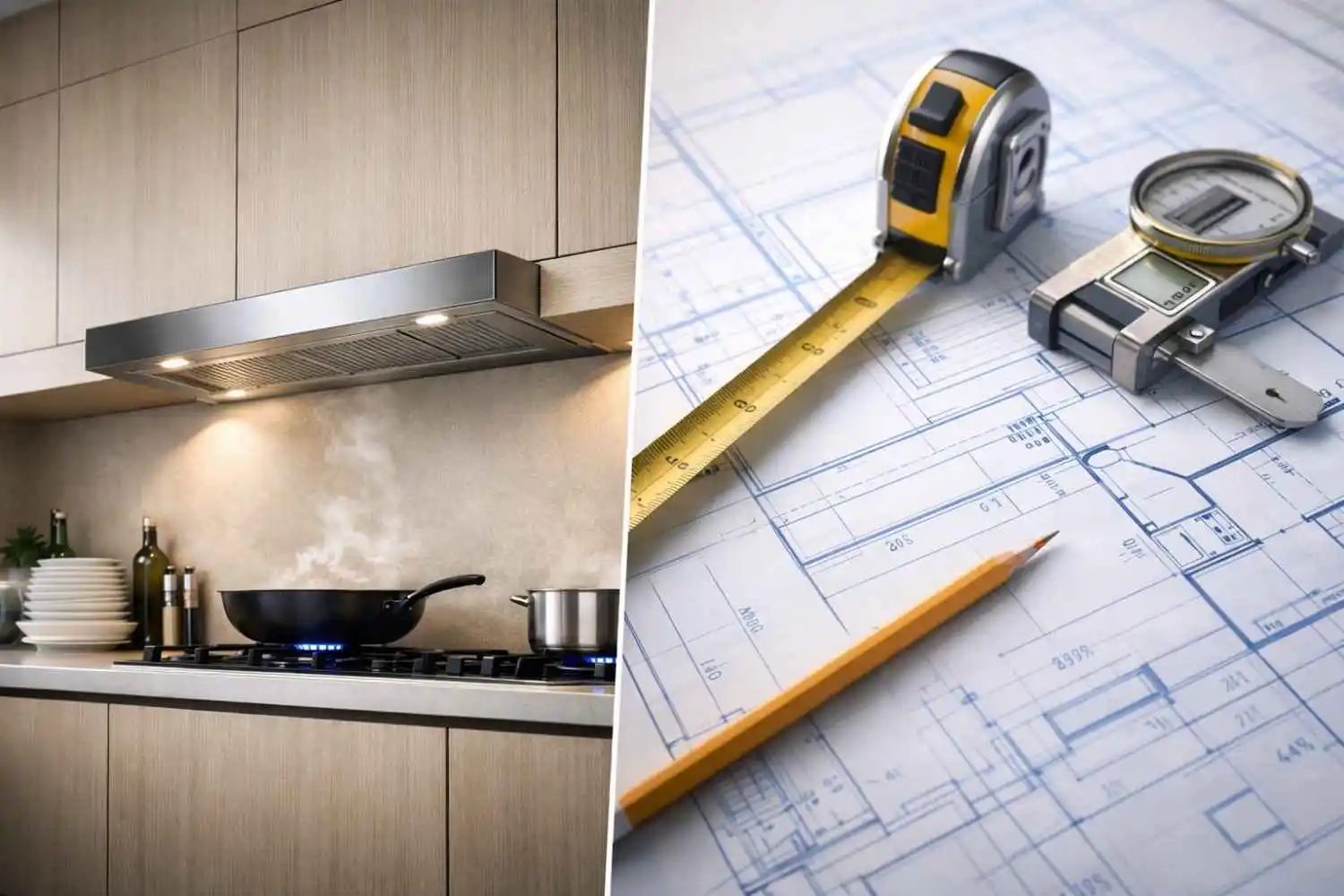
1. Measure your kitchen and cooktop size
Before looking at models, pick up a measuring tape.
1. Measure the width of your cooktop or hob.
2. Measure the available wall width where the chimney will be mounted.
3. Note the height from the hob to the underside of your cabinets or ceiling.
These three measurements decide whether a 60cm or 90cm straight line chimney will fit comfortably and how much space you actually have for ducting or recirculation.
2. Choose the correct chimney size (60cm or 90cm)
Now match those measurements to the chimney width:
A 60cm straight-line model suits compact 2–3 burner hobs and smaller wall spaces.
A 90cm straight-line model works better for 3–5 burner stoves and wider cooktops.
As a rule, the chimney should be at least as wide as your hob. That’s why the 60cm vs 90cm Straight Line Chimney is such an important question. A properly sized chimney captures smoke directly above all active burners instead of letting fumes escape from the sides.
3. Select the right suction power based on cooking style
Once size is decided, think about how you actually cook every day.
If you mostly boil, steam, or make light meals, moderate suction is enough.
If you love deep frying, tadka, grilled dishes, or non-veg curries, pick a higher suction model that can quickly pull out heavy smoke and oil.
At this stage, you’re right in the high-intent zone of your decision. If you want to see different capacities and models laid out in one place, the Straight Line Chimney Buying Guide category page is a great reference while you compare options.
4. Decide on motor type and noise level
Next, look under the hood—literally.
Conventional motors are tried and tested but may be a bit louder at higher speeds.
BLDC motors are more advanced, energy-efficient, and usually quieter, which is ideal for open kitchens or homes where the cooking area is near the living room.
Noise level is often mentioned in decibels (dB). The lower the number, the more peaceful your cooking experience will be. If family members work, study, or watch TV close to the kitchen, don’t ignore this.
5. Check for essential features like auto-clean and filterless design
Finally, consider how much time you want to spend on maintenance.
Auto-clean straight-line chimneys use heat or centrifugal force to collect oil in a tray, reducing deep cleaning effort.
Filterless designs remove the need for washing or replacing traditional filters and keep suction more consistent over time.
Together, these features make a big difference over the years of use. A model that’s slightly more expensive but much easier to maintain often turns out cheaper in the long run.
Common Mistakes to Avoid When Buying a Straight Line Chimney
Even with a good, straight-line chimney buying guide, people still fall into a few common traps. Avoid these, and you’re already ahead of most buyers.
1. Choosing the wrong chimney size
Many buyers pick a smaller chimney to save money or due to a lack of space planning. If the hob is wider than the chimney, smoke escapes from the sides, and the chimney can’t perform at its best. Always think carefully about the 60cm vs 90cm Straight Line Chimney in relation to your cooktop width.
2. Ignoring suction power requirements
Buying a low-suction model for heavy Indian cooking is like using a table fan to cool a hall. It works a little, but not enough. Make sure the suction suits your cooking volume and style instead of just accepting the default option.
3. Buying based only on design
A sleek, minimalist body is nice, but looks alone won’t clear the smell of fried fish. Don’t choose only by appearance. Features like auto-clean, motor quality, suction power, and size are far more important when targeting the best chimney for Indian kitchen usage.
4. Overlooking maintenance and noise levels
A chimney that’s hard to clean often ends up underused or switched off. Similarly, a noisy model quickly becomes annoying. Check how often the filters need cleaning, whether it’s filterless, how easy it is to access the oil tray, and what the noise rating is at higher speeds.
5. Not checking kitchen layout compatibility
A straight-line chimney needs proper placement above the hob and enough space for ducting or recirculation. If your cabinets are too low, the chimney might sit too close to the burners. If there’s a beam, window, or odd corner, installation can become tricky. Always consider the actual kitchen layout, not just the catalogue photo.
Straight Line Chimney Buying Checklist
Use this quick checklist before finalising any model. It pulls together the key points from this chimney selection guide into a simple review list.
● Correct chimney size (60cm or 90cm)
Make sure the width of your chimney matches or slightly exceeds the width of your cooktop. Re-check the 60cm vs 90cm Straight Line Chimney decision against your measurements.
● Suitable suction capacity
Choose higher suction for heavy frying and non-vegetarian dishes, and moderate suction for lighter cooking. A busy Indian kitchen nearly always benefits from a more powerful unit.
● Auto-clean technology
Prefer models with auto-clean if you cook often with oil and spices. This keeps internal parts cleaner, maintains suction, and reduces the frequency of messy manual cleaning.
● Low noise operation
Check the dB rating, especially if your kitchen is open to other living spaces. Quiet chimneys make it easier to talk, watch TV, or work nearby without constant humming.
● Filter type and ease of maintenance
Decide whether you want traditional baffles or mesh filters, or a filterless design. Filterless and auto-clean models usually require less effort. Make sure you can access parts easily for routine cleaning.
● Budget and warranty consideration
Set a realistic budget based on your cooking style and kitchen size. If you’d like to understand how features and capacities affect straight-line chimney price, you can refer to the detailed Straight Line Chimney Price List in India for typical ranges and value picks. Always check warranty coverage on the motor and overall unit before deciding.
Once you’ve ticked all these boxes, you’re ready to shortlist actual products. To compare real models that match your criteria, explore the Straight Line Chimney Buying Guide category page and filter options by size, suction, and features.
Matching Your Kitchen to the Right Straight Line Chimney
Picking the right chimney isn’t about guessing. It’s about matching your kitchen size, hob width, cooking style, and comfort preferences with the right combination of size, suction, motor, and features. Once you understand 60cm vs 90cm Straight Line Chimney, suction needs, and how auto-clean and filterless technology help, the choice becomes very straightforward.
If you follow this simple, straight-line chimney buying guide, you’ll end up with a chimney that quietly does its job every day, keeps your kitchen fresher, and blends beautifully with your modular layout. When you’re ready to look at actual products, you can start with the curated range on the Straight Line Chimney Buying Guide page and pick the one that best fits your home.
FAQs
Start by measuring your hob and kitchen space, then decide between 60 cm vs 90 cm Straight Line Chimney based on hob width and wall size. Next, select suction power according to how heavily you cook, choose a suitable motor (conventional or BLDC), and look for features like auto-clean and filterless design that match your maintenance preference.
The ideal suction depends on kitchen size and cooking style. Heavier Indian cooking with deep frying and strong spices needs higher suction, while lighter cooking can manage with a moderate level. For many Indian homes, picking a slightly higher suction than the absolute minimum is a safer choice to keep smoke and odors under control.
The best chimney for Indian kitchen setups is usually a straight-line model with adequate width, high enough suction, and either auto-clean or filterless technology. This combination handles oil, steam, and masala fumes efficiently while keeping maintenance manageable.
Auto clean isn’t mandatory, but it’s very helpful. It reduces the amount of sticky oil that builds up inside the chimney and collects it in an easy-to-remove tray. If you cook frequently with oil or deep fry often, auto-clean can significantly cut down your cleaning time and maintain suction performance.
Both baffle and mesh filters work, but modern filterless designs are becoming popular because they remove the need to wash or replace filters. If low maintenance is a priority, a filterless auto-clean straight-line chimney is often the most convenient choice in a chimney selection guide.
Noise level matters more than many people expect. A noisy chimney can make cooking uncomfortable, especially in open kitchens where sound travels to the dining and living areas. Checking the dB rating and considering quieter BLDC motor models can give you a calmer cooking experience.
For modular kitchens, a straight-line chimney that aligns with cabinet lines and doesn’t project too far into the room is ideal. It should match the hob width (60cm or 90cm), provide adequate suction, and look clean and minimal so it blends with the overall design.
Yes, size is crucial. A chimney that’s smaller than your hob won’t capture fumes from all burners properly. That’s why the 60cm vs 90cm Straight Line Chimney is such an important decision. The correct size ensures efficient smoke capture and better overall performance.
Focus on chimney width, suction capacity, motor type, noise level, auto-clean function, filter type (or filterless design), and warranty. These elements directly affect how well the chimney performs, how easy it is to maintain, and how comfortable it is to use daily.
BLDC motors are generally better for many homes because they’re more energy-efficient, generate less heat, and often run quieter than conventional motors. If you want a future-ready straight-line chimney with lower noise and better efficiency, a BLDC model is a strong option to consider in your straight-line chimney buying guide.
