
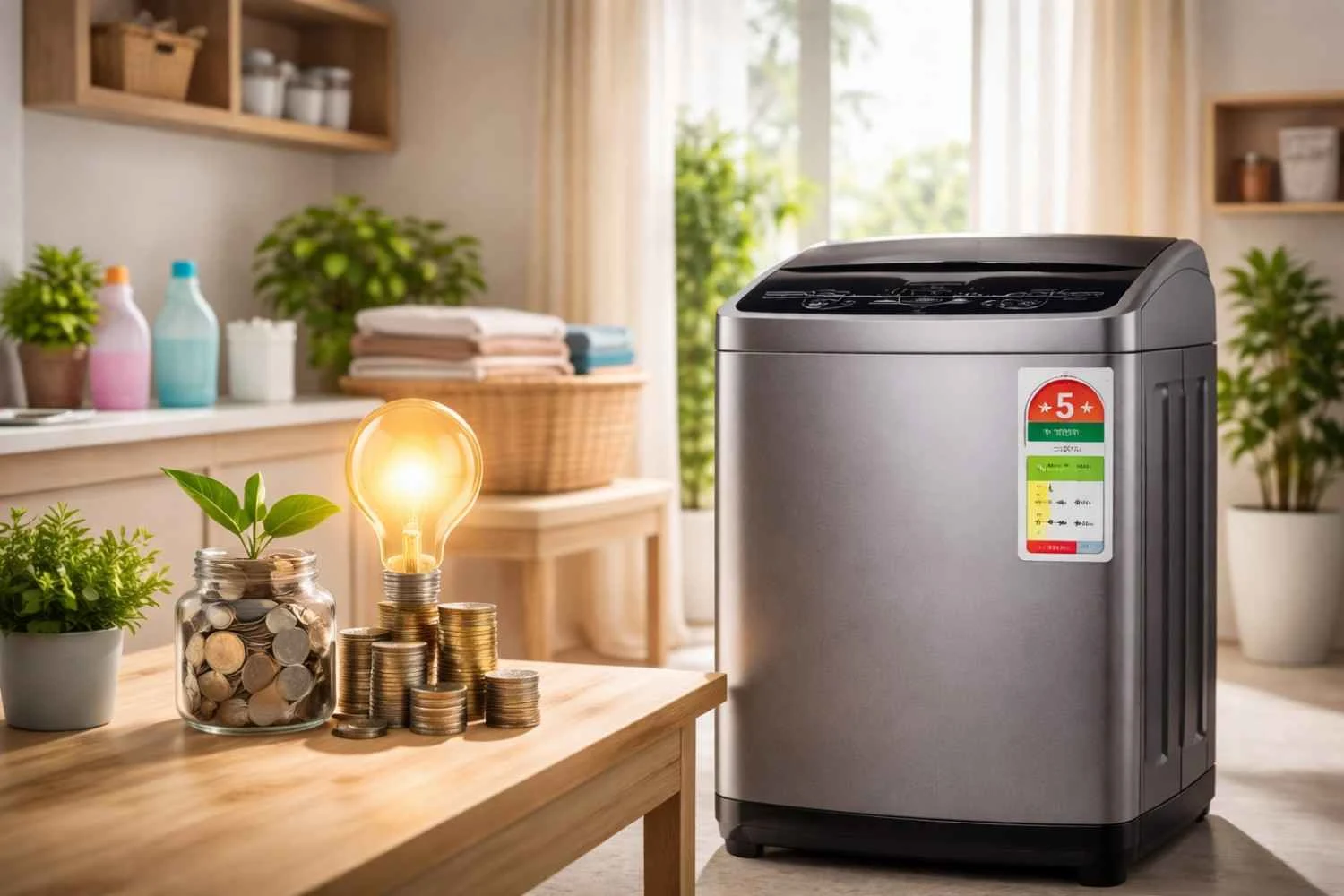
Top Load Washing Machine Energy Consumption – Units, Cost & Savings
Electricity bills in most Indian homes have quietly climbed month after month. Fans, lights, geysers, refrigerators, and now multiple gadgets all add up. Among these, the humble washing machine is one appliance that runs several times a week, often without anyone really thinking about how much power it uses. If you’re planning to buy a new top-load washing machine or want to understand your current machine’s impact on the bill, this guide walks you through everything in simple terms.
Many people assume that every top-load washer is a power-hungry appliance. Another common belief is that only front-load models can be energy-friendly. In reality, modern energy-efficient top-load washing machine designs, especially those using inverter motors, can wash clothes effectively while keeping electricity usage under control. The key is understanding how units are calculated, what factors significantly affect power consumption, and how selecting the right inverter washing machine can make a noticeable difference to your monthly expenses.
How Much Electricity Does a Top-Load Washing Machine Use?
Let’s start with the biggest question on everyone’s mind: “Exactly how many units does my washing machine consume?”
1. Average Units Per Wash
For most modern top-load machines, the average consumption ranges between 0.3 and 1.5 units per wash. That’s a broad range because power usage depends on several factors:
● Machine capacity
● Type of motor (standard vs inverter)
● Wash program selected (Normal, Heavy, Quick, Eco, etc.)
● Water temperature (cold vs hot water)
● Duration of the cycle
A smaller-capacity energy-efficient top-load washing machine running in eco mode on cold water might use close to 0.3–0.4 units. A large-capacity model running a long heavy-duty cycle with higher spin speeds can go closer to 1.2–1.5 units.
2. Why Capacity And Motor Type Matter
1. Capacity:
○ Machines in the 6–6.5 kg range use less power per wash, but if you overload them or run many small loads, you end up using more units overall.
○ Larger 8–9 kg machines use more power per cycle, yet they can wash bulk loads in one go. For big families, this may actually be more efficient.
2. Motor type:
○ Standard motors run at relatively fixed speeds without adapting much to the load.
○ In an inverter washing machine, the motor adjusts its speed according to the drum load, reducing unnecessary energy use. This is one of the key inverter motor washing machine benefits that directly translates to lower electricity consumption and smoother operation.
3. Estimated Monthly And Yearly Electricity Cost
To make things practical, here’s an approximate cost breakdown. These numbers assume ₹7 per unit of electricity and roughly 15–20 wash cycles per month.
| Capacity | Units per Wash | Monthly Cost | Yearly Cost |
| 6–6.5 kg | 0.3 – 0.6 | ₹70 – ₹130 | ₹850 – ₹1,600 |
| 7–7.5 kg | 0.5 – 0.8 | ₹120 – ₹180 | ₹1,400 – ₹2,100 |
| 8–9 kg | 0.8 – 1.5 | ₹180 – ₹300 | ₹2,200 – ₹3,600 |
These numbers are estimates, yet they help you see that washing machine power consumption is not as frightening as it sometimes sounds. Even a large-capacity top-load inverter washing machine usually adds a few hundred rupees per month to your electricity bill, not thousands.
Of course, this assumes smart usage, correct wash cycles, and an efficient machine. That’s where BEE star ratings and inverter technology come in.
Role of BEE Star Rating in Energy Consumption
When you look at the front panel of most washing machines in India, you’ll notice a colorful label with stars. This is the BEE (Bureau of Energy Efficiency) star rating, and it plays a big role in long-term power savings.
1. 5-Star Rated Machines Use 30–40% Less Electricity
A 5-star-rated energy-efficient top-load washing machine is designed to use significantly less electricity per wash compared to 1-star or 2-star models. In many cases, a 5-star machine can save 30–40% energy over its lifetime.
That means:
● Lower units consumed for every wash
● Reduced monthly and yearly electricity bills
● Less environmental impact due to reduced energy demand
Combine a high BEE rating with an inverter washing machine motor, and you get one of the most efficient laundry solutions available today.
2. 3-Star Models Have Higher Long-Term Running Costs
A 3-star machine might look cheaper upfront, and its performance might seem similar on the surface. However, because it uses more electricity per cycle, the running cost over 7–10 years of usage can be much higher.
If your household washes clothes multiple times a week, the extra units consumed add up quickly. In many cases, the difference you pay in the electricity bill over a few years could buy you a better machine to begin with.
Always Check The BEE Energy Label Before Purchasing
Before you select an energy-efficient top-load washing machine, take a moment to:
● Look at the BEE star rating (aim for 4 or 5 if possible)
● Note the annual energy consumption mentioned on the label
● Compare similar capacities and technologies (like inverter vs non-inverter)
This small step can make a big difference to your long-term expenses, especially as electricity tariffs continue to rise.
If you’re specifically searching for an energy-efficient top-load washing machine with good star ratings and modern features, you can explore a full range of options at Aditya Retail:
energy-efficient top-load washing machine
Why Motor Technology Matters: Inverter vs Conventional
Beyond star ratings and capacity, the motor inside your washing machine is the real worker consuming power. Understanding motor technology helps you see why an inverter washing machine is usually smarter.
1. Conventional Motors
Traditional washing machines typically use fixed-speed induction motors. These:
● Operate at a predefined speed regardless of the load inside the drum
● Use the same amount of power whether you’re washing a half-load or a full-load
● Can generate more vibration and noise, especially during spin cycles
These motors are reliable but not always the most efficient for modern usage patterns.
2. Inverter Motors
In a top-load inverter washing machine, the motor uses inverter technology that can vary its speed depending on:
● Weight of the clothes
● Type of program
● Stage of the wash cycle
Key inverter motor washing machine benefits include:
● Lower power usage: The motor draws only the power it needs, especially for smaller loads or lighter programs.
● Less noise and vibration: Smooth adjustments reduce jerks, making the machine quieter and more stable.
● Longer motor life: Efficient operation and fewer harsh starts extend the life of the motor and related components.
● Better wash performance: Precise control of drum speed leads to better cleaning and fabric care.
When you pair inverter technology with a high BEE rating, your top load inverter washing machine becomes truly cost-efficient over the years of daily use.
How to Reduce Power Consumption
Even the most advanced energy-efficient top-load washing machine can waste electricity if you use it poorly. The good news is that a few simple habits can immediately reduce power usage and lower your monthly bill.
1. Wash Full Loads Instead of Small Loads
● Every wash cycle uses a base amount of energy just to run the motor, control panel, and water inlets.
● If you run many small loads, you repeatedly pay this base cost.
Try to:
● Wait until you have a reasonable load of similar-colored clothes.
● Use a large-capacity top-load inverter washing machine wisely by filling it to a comfortable level (not overloading, but not leaving it half-empty either).
This way, you spread the electricity used over more clothes, which effectively lowers the per-garment energy cost.
2. Use Eco or Energy-Saving Wash Modes
Most modern machines offer wash programs like Eco, Save, or Smart:
● These modes optimize drum movement, wash time, and water usage.
● They often run slightly longer but at lower speeds or with lower temperatures, which can reduce power consumption.
Make it a habit to choose Eco mode for lightly soiled daily wear instead of always using heavy or intensive modes. It’s a simple habit that your inverter washing machine can turn into real monthly savings.
3. Prefer Cold or Normal Water Cycles
Heating water consumes a lot of energy. If your top-load machine has built-in water heating or you manually use very hot water:
● Your units per wash can increase significantly.
For most Indian washing loads:
● Cold or normal water is usually sufficient when combined with a good detergent.
● Warm water may be used occasionally for very dirty clothes, baby garments, or towels, but it shouldn’t be the default.
Keeping cycles on cold or normal temperature is one of the easiest ways to keep your energy-efficient top-load washing machine truly efficient.
4. Choose Inverter Motor Washing Machines
If you’re buying a new washer, prioritise models that use inverter motors:
● You get all the inverter motor washing machine benefits, such as adaptive speed control, lower power usage, and smoother performance.
● Over 7–10 years, the combined savings in electricity and reduced wear can easily justify the slightly higher purchase price.
To understand this technology in more detail, along with usage tips, you can read more here:
👉 Inverter motor top load washing machine
5. Perform Regular Maintenance
A well-maintained machine uses less power because:
● The drum rotates freely without obstruction.
● The motor doesn’t have to struggle against friction, dirt, or limescale.
Basic maintenance tips:
● Clean the lint filter regularly.
● Run a drum-clean or empty cycle with appropriate cleaner once a month (or as recommended).
● Ensure the machine is level to reduce vibrations.
● Don’t ignore unusual noises – they may indicate parts that add strain to the motor.
A clean, smooth-running top-load inverter washing machine rewards you with efficient performance and fewer breakdowns.
Real-Life Example: Understanding Your Monthly Bill Impact
Let’s imagine a mid-sized Indian family using a 7–7.5 kg energy-efficient top-load washing machine two to three times a week.
● Average consumption per wash: around 0.6 units (typical for a good 5-star inverter model).
● Washes per month: say 18 cycles.
● Units used monthly: 0.6 × 18 = 10.8 units.
● At ₹7 per unit, monthly cost ≈ ₹75–₹80.
Even if the machine were slightly less efficient, the cost might be in the ₹120–₹150 range – still a small share of most urban electricity bills. This example shows that washing machines are important to optimize, but they’re not unmanageable.
When your machine is an inverter washing machine with a strong energy rating, and you follow smart usage habits, laundry doesn’t have to be a financial burden.
Summary: Making Sense Of Top Load Washing Machine Energy Use
Many people fear that a top-load washer will shoot up their electricity bill. In reality, actual energy consumption is quite manageable, especially when you:
● Choose the right capacity and motor type
● Prioritise good BEE star ratings
● Use eco-friendly washing habits
The biggest takeaways are:
● A typical wash consumes 0.3 to 1.5 units, depending on size, program, and technology.
● Monthly costs usually range from ₹70 to ₹300, even for large families.
● Simple habits like washing full loads, using Eco mode, and avoiding hot water can cut power usage noticeably.
● Investing in an energy-efficient top-load washing machine with inverter technology offers clear inverter motor washing machine benefits that show up in smoother performance, quieter operation, and lower long-term bills.
If you’re planning to upgrade or buy your first top-load inverter washing machine, explore the latest energy-efficient models and compare features, capacities, and star ratings here:
👉 energy-efficient top-load washing machine
FAQ – Top Load Washing Machine Energy Consumption
Most top-load machines use between 0.3 and 1.5 units per wash. A smaller 6–6.5 kg model on an eco program might be near 0.3–0.4 units, while a large-capacity machine on a heavy-duty cycle might move towards 1.2–1.5 units. An inverter washing machine with a good BEE rating tends to stay at the lower end of this range for everyday cycles.
Yes, especially modern models designed as an energy-efficient top-load washing machine. While older top-loaders sometimes had a reputation for using more water and power, today’s machines with inverter motors, improved drum design, and Eco modes are much more efficient. A 4 or 5-star top-load inverter washing machine can be highly competitive with many front-load models in terms of energy use.
Several factors influence how many units your washer uses:
● Capacity: Larger drums use more power per cycle but can wash more clothes at once.
● Motor type: Inverter motors adjust speed and save power; standard motors don’t.
● Wash program: Heavy or intensive cycles use more energy than Eco or Quick washes.
● Water temperature: Heating water consumes extra electricity; cold washes are more efficient.
● BEE star rating: Higher-star machines consume fewer units for the same work.
● Usage habits: Many small loads, excessive spinning, or unnecessary repeated cycles all add to consumption.
By choosing an energy-efficient top-load washing machine and using it wisely, you can keep all these factors under control.
Yes. One of the biggest inverter motor washing machine is lower electricity usage. An inverter motor:
● Adjusts its speed to match the load instead of running at one fixed high speed.
● Draws only as much power as needed at each stage of the wash.
● Reduces energy waste, especially for partial loads or lighter programs.
In a top-load inverter washing machine, this leads to smoother operation, less noise, and noticeable energy savings over months and years of daily use.
You can follow these practical steps:
● Wash full loads: Avoid running the machine for very small loads unless necessary.
● Use Eco or energy-saving modes: These are optimised to lower power and water usage.
● Prefer cold or normal water: Heating water is one of the largest energy drains.
● Choose an inverter washing machine: Inverter motors enhance efficiency automatically.
● Maintain the machine: Clean filters, keep the drum free of buildup, and ensure the machine is level and running smoothly.
For most households, yes, it’s worth it. A 5-star energy-efficient top-load washing machine:
● Uses 30–40% less power compared to lower-rated models.
● Helps reduce monthly electricity bills, especially if you wash frequently.
● Minimizes environmental impact.
When combined with inverter technology, a 5-star top-load inverter washing machine often recovers its extra purchase cost through energy savings over a few years of regular use.
For a typical Indian family:
● A mid-sized 7–7.5 kg top-loader, used 15–20 times a month, may add ₹70 to ₹180 per month to the electricity bill if it’s an efficient inverter model.
● Larger capacities may go up to ₹300 per month in heavy-use scenarios.
These numbers vary by tariff, frequency of use, and machine efficiency. Yet they show that, with a good inverter washing machine and smart habits, laundry remains a fairly manageable part of the total electricity bill.
